These year end book posts always take forever to pull together but I admit I love looking back at them so they are worth the time!
 |
I didn't read "New York"yet but I made it through all the others and a whole lot more!
|
This year I read 65 books, totaling out at 19,827 pages. (2019 was 62 books at 18,238 pages.) I was pleased to top both my title goal of 60, as well as cover more pages.
As always, mysteries always top my list as a favorite genre. I read some good ones and a few that I will willingly pass long to someone or donate to the library!
Here are the lists by category. Favorites are noted with ***. Books I've featured on this blog earlier this year are hotlinked.
Fiction
In this category, my favorite of the year was "The Dutch House," by Ann Patchett, along with the three books by Antoine Laurain -- very fast, whimsical reads and just what I needed this Covid summer.


I was most disappointed in Julian Fellowes "Belgravia." I was a big fan of his "Downton Abbey," and this is somewhat in the same vein but it just didn't connect with me.

Another disappointment was Ann Patchett's "Commonwealth." I so loved "The Dutch House" and her previous books, especially "Bel Canto," so perhaps I had unrealistic expectations.

*** The Dutch House (Ann Patchett)
Winter Solstice (Elin Hilderbrand)
Belgravia (Julian Fellowes)
***The President's Hat (Antoine Laurain) / Vintage 1954 (Antoine Laurain) / The Portrait (Antoine Laurain)
Commonwealth (Ann Patchett)
Reflections (Richard Lassin)
Mystery
My favorite of all these was Louise Penny's newest, "All the Devils are Here," with Anthony Horowitz's "The Magpie Murders" high on my list. Josephine Tey's classic "The Daughter of Time" was a real winner that had me looking for more on Richard III.


But you'll also see lots of repeated names here. Of particular notes are new entries in the remarkably complex "Serralier" series by Susan Hill, more "Ruth Galloway" mysteries by Elly Griffiths and one of my new favorites, Donna Leon's, "Guido Brunetti" books.


With any series, I recommend reading in order, although the most recent Louise Penny ("All the Devils are Here") stands on its own. It was also fun to catch up with the newest "Maggie Hope" mystery by Susan Elia Macneal and Deborah Crombie's newest, "A Bitter Feast."
Kate Atkinson's "Big Sky" brought back Jackson Brodie and was worth the wait. Ann Cleeves has a new "Vera" out in "The Darkest Evening." It is her most recent but my first and I will read more and seek out the TV series based on her books.
I also want to give a shout-out to the British Crime Library Series (BCL, when listed below) which brings back classics from the "Golden Age of Mystery" by authors more obscure but no less clever than Agatha Christie and P.D. James. (And their covers are little art masterpieces in themselves!)

Prisoner in the Castle (Susan Elia Macneal)
***The Various Haunts of Men (Susan Hill) / The Pure in Heart (Susan Hill)
The Silent Patient (Alex Michelides) - This was hot on the NYT Bestseller list this year. Not my favorite but I admit, I was surprised. An unreliable narrator who has ever appearance of being reliable.

Desperate (Patti Battison) / Obsessed (Patti Battison) / Silent Grave (Patti Battison)
*** A Bitter Feast (Deborah Crombie) One of my favorite series with husband/wife detectives working in London.

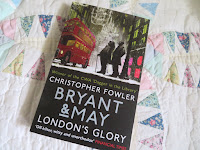
*** Bryant and May: London's Glory (Christopher Fowler) short story collection of the two eccentric British detectives.
***The Magpie Murders (Anthony Horowitz) A great entry by the writer who also brought us television series "Foyle's War"and "Midsomer Murders."
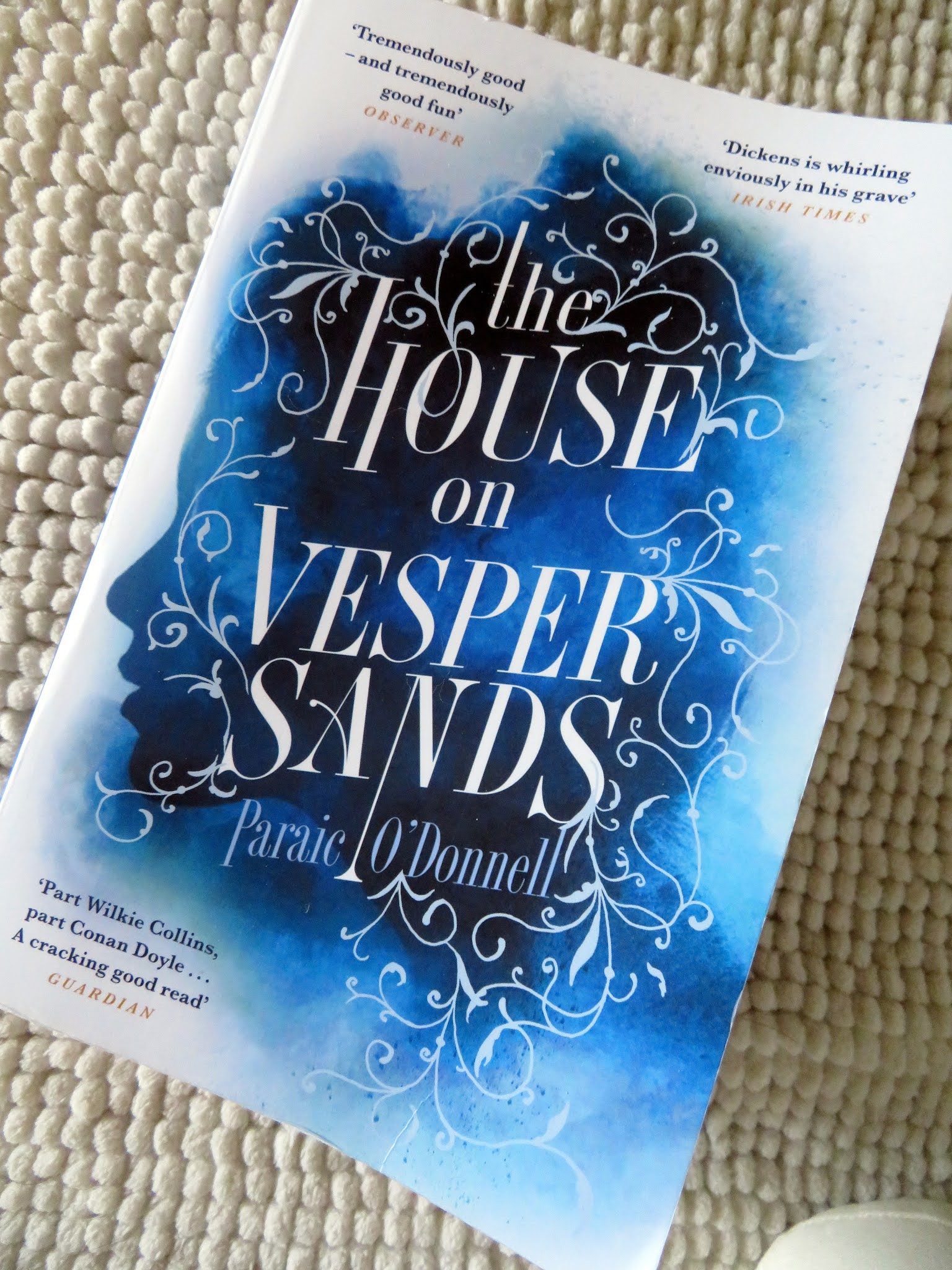
The House on Vesper Sands (Pariac O'Donnell) -- A fun Victorian mystery set in London. I hope it is the first of a series.

Death at La Fenice (Donna Leon) / Death in a Strange Country (Donna Leon) / Death and Judgment (Donna Leon) / Dressed for Death (Donna Leon) / Aqua Alta (Donna Leon) These are the first books in a the Guido Brunetti series set in Venice. He eats very well indeed. Don't read when you are hungry!

The Janus Stone (Ely Griffiths) / A Room Full of Bones (Elly Griffiths) / The House at Sea's End (Elly Griffiths) / The Crossing Places (Elly Griffiths) / A Dying Fall (Elly Griffiths) Griffiths'lead detective, Ruth Galloway, is a forensic archaeologist working in the Norfolk area of England.
Sidney Chambers and the Perils of the Night (George Runcie) / Sidney Chambers and the Problem of Evil (James Runcie) These are the books that inspired the "Grantchester" series on PBS.

The Bookseller (Mark Pryor) This is a new series set in Paris featuring a Paris Embassy and former FBI agent as the lead character. In this one, they are trying to find a bouquiniste who disappeared from his stall - witnessed by the lead character. I will read more of these.

The Division Bell Mystery (Ellen Wilkinson) BCL / Death Has Deep Routes (Michael Gilbert) BCL / It Walks by Night (John Dickson Carr) BCL From the British Crime Library series written in the 30s.
***Big Sky (Kate Atkinson)
***The Daughter of Time (Josephine Tey)
Every Contact Leaves a Trace (Elanor Dymott)
Crowned and Dangerous (Rhys Bowen)
Don't Look Back (Karin Fossum)
No Shred of Evidence (Charles Todd)
***All the Devils are Here (Louise Penny)
***TheDarkest Evening (Anne Cleeves)
Blue Christmas (Emma Jameson)
***Nine Lessons (Nicola Upson) This series of mysteries (this is #6) features the real-life author Josephine Tey as the protagonist. Even though I'm not always fond of real-life characters playing a main role in fiction (see below), it works here because the work is so obviously fiction -- and well written. The plots are very clever in all the books. I'd recommend starting with the first of the series.
Plaid and Plagarism (Molly MacRae) Biography/Memoir
My favorite of all the memoirs and biographies in this category was by our blog friend Kathy McCoy -- "The Crocodiles Will Arrive Later." She had long wanted to write a memoir of her years growing up and it is a powerful story of resilience with more than a good deal of humor and loads of love. I was inspired.

Worst on the list was Hector Bolitho's "King Edward VIII" An Intimate Biography." This was written right after the abdication and it was not only poorly written but really very little of what I look for in a biography -- namely, research. Not recommended!

Alex Trebek's "The Answer Is..." isn't deep but it's fun to learn more about the late, beloved host of "Jeopardy." And Ann Hood's "Kitchen Yarns" is more a collection of essays on her life as related to food -- but the recipes look pretty good and the writing is delightful. It was fun to learn more about Richard Rodgers ("Something Wonderful") and Queen Victoria as well.

Something Wonderful (Todd Purdum)
King Edward VIII: An Intimate Biography (Hector Bolitho)
***Comfort Me with Apples (Ruth Reichl) -- I love Reichl's writing, her ability to tell her story with a good deal of self-awareness and honesty. Plus, there are terrific recipes!

Queen Victoria's Sketchbook (Marina Warner) A combination of paintings by Queen Victoria and the history behind them and her love of art.
The Answer Is... (Alex Trebek)
***The Crocodiles Will Arrive Later (Kathy McCoy)
Kitchen Yarns (Ann Hood)
***Beatrix Potter: A Journal Only 32 pages and mostly images and diary entries, this large and lovely book was a real treat.


Fictional Biography (I really don't like this genre!)
For the most part, I find fictional biography the lazy author's "biography." They research some (and you'd better take a look at their sources -- some are better at it than others; always check the notes at the end of the book and then look up those sources to see how they stand in terms of bias). Then they make up the conversations and motivations which may -- or may not -- be close to accurate.
"Love and Ruin" was about Martha Gellhorn and her relationship with Ernest Hemingway. Paula McLain has written about the Hemingways before ("The Paris Wife"). I may not be a fan of the genre but the the book is well written and appears to be much better researched than the others in this category.
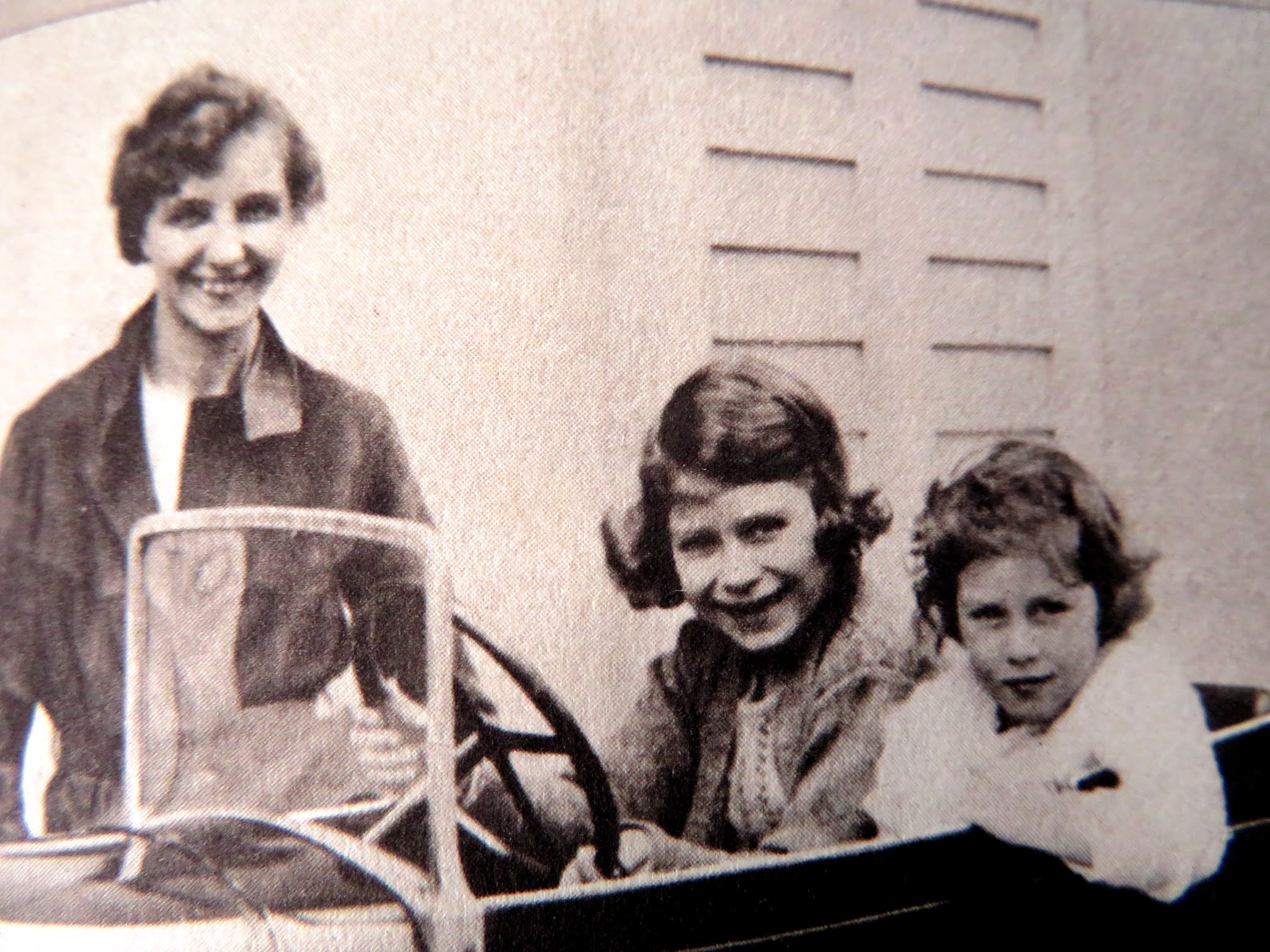
"The Royal Governess" is about Marion Crawford, governess to the now Queen Elizabeth II, shunned after she had written a book called "The Little Princesses. From the notes, her research was largely the aforementioned book. The conversations and situations in some cases are accurate (or appear to be, as reported in Crawford's book, which I have read and returned to when reading "The Royal Governess") and in some cases I wondered, "Where did she find this?" I did a pretty exhaustive google search and there was much about her private life I couldn't verify. Or come close.

Even worse was a book called "The Queen's Secret" which is about Elizabeth (Queen Mother) during World War II. I have issues with her sources. By and large most of them have had an agenda against the Queen Mum for a variety of reasons, and maybe for some, those reasons are well founded. But that's not what I really hated about it. Honestly, your 14-year-old diary-writing daughter could pull this book (written in "first person diary form") far better than the author. Anne Frank was younger than that! I have tried to decide if I should just throw this one in the trash (I absolutely hate the idea of tossing a book) or risk someone buying it at a library sale and believing it all without research. It's still sitting by the door next to the garage and garbage can, awaiting my decision.
Love and Ruin (Paula McLain)
The Royal Governess (Wendy Holden)
The Queen's Secret (Karen Harper)Non-Fiction
This is a wacky category because it's a little bit of everything, including "Almost Everything," by Anne Lamott -- which isn't really biography and it isn't really non-fiction and it isn't really an essay. It is just wonderful. If anything connected with me more during these past political and Covid months, it was this book (although it was written before Covid hit.)
Tops of this category is "Les Parisiennes" about women in France during WWII, with a heavy focus on the Resistance. "The Wild Remedy" and "Mudlarking" were both fascinating to me -- the first because of its message of the power of nature and art for those dealing with Seasonal Affective Disorder and depression; the latter because I was always curious about what those mudlarkers found when combing through the detritus of the Thames when the tide went out.
***London Peculiars (Peter Ashley) If you love London, this is filled with all sorts of off the beaten track spots you might want to check out!
When Paris Sizzled (Mary McAuliffe) Paris during the 1930s with looks at such luminaries as Chanel, Gershwin, Cocteau, Satie and many more.

***Almost Everything (Anne Lamott) - Reading this book helped me get through the trying political and Covid times. Lamott just does that. She is wonderful.

***Les Parisiennes (Anne Sebba) -- This one is fascinating. It covers the WWII years in Paris and the women who were a part of it -- the resistance, the collaboators, the spies.

***Remembrance of Things Paris (ed. Ruth Reichl) Only one piece in this fabulous collection of essays from "Gourmet" is by Reichl but oh, the quality of the writing, the way it summarizes Paris from the war years on. I loved this one! The recipes are a wonderful (but unnecessary) touch. If you love Paris and food, read this one.

***The Wild Remedy (Emma Mitchell) If you are affected by depression (I learned a lot about depression in this one) or seasonal affective disorder, this book may help you through. And if you aren't, it's a wonderful (and beautifully illustrated) read anyway.

***Mudlarking (Lara Maiklem) If you've ever had a yen to go hunting for old coins and bits of pottery on the Thames, check this one out! A fascinating look at London's river -- and what washes up when the tide goes out.

The Library Book (Susan Orlean)
I know everyone has different reading tastes. Mine are somewhat eclectic. But there are some good titles on this list -- in fact, with the exception of "The Queen's Secret" and "The Royal Governess," I would recommend all of them, depending on what you enjoy. Time to turn the page to a new stack of books!
Sharing with: Let's Keep in Touch